xanthan gum substitutes gluten free baking
6 Best Xanthan Gum Substitutes for Gluten-Free Baking
The 6 best xanthan gum substitutes for gluten-free baking — ratios, best uses, and which to choose for bread, cookies, cakes, and more.
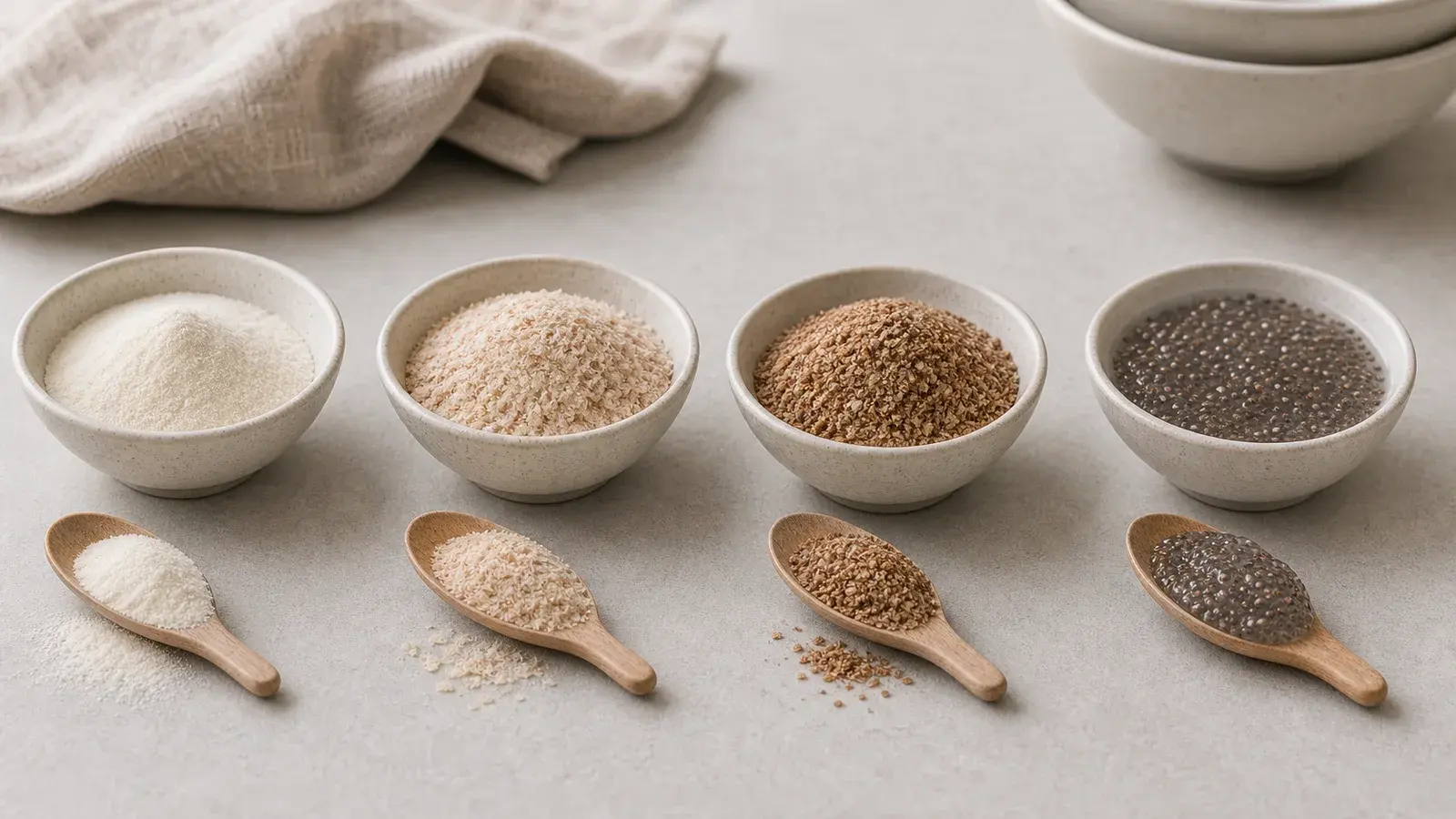
Xanthan gum is the workhorse binder in most gluten-free baking — it mimics the elasticity and structure that gluten normally provides. But what if you've run out, can't find it, or simply prefer to avoid it? Whether it's digestive sensitivity, cost, or ingredient preference, there are several reliable alternatives that can step in. Here are the six best xanthan gum substitutes, with exact ratios and the scenarios where each one excels.
Why Xanthan Gum Matters in GF Baking
In wheat-based baking, gluten traps gas bubbles, gives dough elasticity, and holds everything together. Gluten-free flours lack this entirely — without a binder, GF bread is dense, cookies crumble, and pizza dough tears. Xanthan gum is a polysaccharide produced by bacterial fermentation, effective in tiny amounts (¼ to 1 teaspoon per cup of flour). Its substitutes work through different mechanisms, so the right choice depends on your recipe.
Quick Comparison of Substitutes
| Substitute | Best For | Ratio vs Xanthan Gum | Flavor Impact |
|---|---|---|---|
| Psyllium husk | Bread, pizza dough | 2:1 (whole husk) / 1:1 (powder) | Neutral |
| Guar gum | Cold dishes, sauces | 1:1 to 1.5:1 | Neutral |
| Ground flaxseed | Muffins, pancakes | 1:1 | Slightly nutty |
| Chia seeds | Quick breads, muffins | 1:1 | Very mild |
| Egg white | Cakes, cookies | 1 egg white per ¼ tsp xanthan | Adds richness |
| Arrowroot powder | Thickening, cookies | 2:1 | Neutral |
1. Psyllium Husk
Best for: Bread, pizza dough, bagels
Psyllium husk — the fibrous shell of *Plantago ovata* seeds — is the gold standard xanthan gum alternative for bread baking. When mixed with water, it forms a thick, viscous gel that closely mimics the elasticity of gluten, making it ideal for yeasted breads, pizza crusts, and sandwich loaves that need real stretch and structure.
Ratio: Use 2 teaspoons whole psyllium husk or 1 teaspoon psyllium husk powder to replace 1 teaspoon xanthan gum.
Note: Psyllium can turn baked goods slightly purple-grey in some conditions — this is harmless but can look odd in white breads. High-quality psyllium husk powder from brands like Anthony's or Viva Naturals minimizes this effect.
2. Guar Gum
Best for: Cold foods, sauces, ice cream, no-bake recipes
Guar gum is derived from guar beans and works like xanthan gum as a thickener. It excels at cold temperatures — ideal for ice cream, dressings, and refrigerated dips — but can break down at high baking temperatures.
Ratio: Use 1 to 1.5 teaspoons guar gum per 1 teaspoon xanthan gum. Use conservatively — higher amounts can cause bloating.
3. Ground Flaxseed (Flax Meal)
Best for: Muffins, quick breads, pancakes, cookies
When mixed with water, ground flaxseed forms a gel — the same "flax egg" used as an egg substitute. This gel can also serve as a structural binder in baked goods with moderate binding requirements. It works best in denser, heartier recipes and less well in delicate cakes that need a light crumb.
Ratio: Use 1 tablespoon ground flaxseed + 3 tablespoons water (let gel for 5 minutes) per 1 teaspoon xanthan gum.
Flavor impact: Flaxseed adds a mild, slightly nutty taste. This is pleasant in oat-based muffins and banana bread but may be noticeable in neutral-flavored items like white sandwich bread.
4. Chia Seeds
Best for: Quick breads, muffins, cookies
Like flaxseed, chia seeds form a gel when hydrated. Whole chia seeds create a slight textural speckle in baked goods (which some people enjoy, others prefer to avoid), while ground chia seeds blend in more invisibly.
Ratio: Use 1 tablespoon ground chia seeds + 3 tablespoons water (rest for 10 minutes) per 1 teaspoon xanthan gum.
Chia gel has a neutral flavor, making it more versatile than flaxseed in delicate recipes.
5. Egg White
Best for: Cakes, cookies, soufflés
A fresh egg white contains proteins that coagulate during baking, providing both binding and a degree of lift. If you're not egg-free, this is a simple and effective xanthan gum alternative in cakes, cookies, and light pastry.
Ratio: Use 1 egg white to replace ¼ teaspoon xanthan gum. Reduce other liquids slightly, as egg white adds moisture.
6. Arrowroot Powder
Best for: Thickening sauces, pie fillings, light cookies
Arrowroot powder is a fine starch extracted from the arrowroot plant. It doesn't provide the same elasticity as xanthan gum but adds a pleasant crispness to cookies and crackers.
Ratio: Use 2 teaspoons arrowroot powder per 1 teaspoon xanthan gum in cookies. For thickening sauces, use a 1:1 ratio with cornstarch.
⚠️ Safety Notes for Celiacs and Allergy Sufferers
- Xanthan gum may be corn-derived — not safe for corn allergy sufferers. Check the source or use an alternative.
- Guar gum comes from legumes and may not suit people with severe legume allergies.
- All substitutes should come from certified gluten-free sources to avoid cross-contamination.
- Psyllium husk is high in fiber and can reduce medication absorption — take medications at a different time of day.
Where to Buy
- Amazon US: Shop xanthan gum and substitutes on Amazon
- Amazon UK: Shop psyllium husk and guar gum on Amazon UK
- iHerb: Browse xanthan gum and baking binders on iHerb
Conclusion
The best xanthan gum substitute depends on what you're baking. Psyllium husk is the top choice for yeasted breads and pizza dough. Guar gum excels in cold applications and sauces. Flaxseed and chia work well in muffins and quick breads. Egg white suits light cakes and cookies. Arrowroot is best for thickening and crispy baked goods. Start with psyllium husk if you only want to keep one alternative on hand — it's the most broadly useful.
Frequently Asked Questions
Q: What can I use instead of xanthan gum in gluten-free bread? Psyllium husk is the best substitute for bread baking. Use 2 teaspoons of whole psyllium husk (or 1 teaspoon of psyllium husk powder) per 1 teaspoon of xanthan gum. It creates a similar elastic, stretchy dough and handles the high heat of bread baking well.
Q: Can I just leave out xanthan gum from a gluten-free recipe? Sometimes — cookies and pancakes may turn out crumbly or flat; bread and pizza will suffer significantly in structure. Substituting with one of the options above is strongly recommended.
Q: Is psyllium husk better than xanthan gum? For bread baking, many bakers prefer psyllium husk for a more natural dough feel. Xanthan gum is more consistent across recipe types. Neither is universally better — it depends on the recipe.
Q: Is guar gum safe for people with celiac disease? Guar gum is made from guar beans, which are naturally gluten-free. However, cross-contamination is possible during manufacturing. Choose a certified gluten-free product to be safe.
Q: How much xanthan gum should I use per cup of gluten-free flour? ¼ tsp per cup for cookies and cakes; ½ tsp per cup for muffins and quick breads; ¾ to 1 tsp per cup for yeasted breads and pizza dough. Double the amount when using whole psyllium husk instead of psyllium powder.