buckwheat flour vs rice flour gluten free
Buckwheat Flour vs Rice Flour: Flavor, Texture and Best Uses
Buckwheat flour vs rice flour — compare flavor, texture, nutrition, and best uses for gluten-free baking. Includes safety tips for celiacs and allergy sufferers.
Despite its name, buckwheat has nothing to do with wheat — it's a seed from a flowering plant related to rhubarb and sorrel, and it's naturally gluten-free. Rice flour is the quiet workhorse of GF baking: neutral, reliable, and endlessly versatile. Together they represent two very different baking philosophies, and understanding their distinct personalities will help you decide when to use each — and when to blend them.
Quick Comparison
| Property | Buckwheat Flour | Rice Flour |
|---|---|---|
| Gluten-free | Yes (but see safety notes) | Yes |
| Flavor | Earthy, nutty, slightly bitter | Mild, neutral |
| Protein content | ~13g per 100g | ~6g per 100g |
| Fiber content | Higher | Lower |
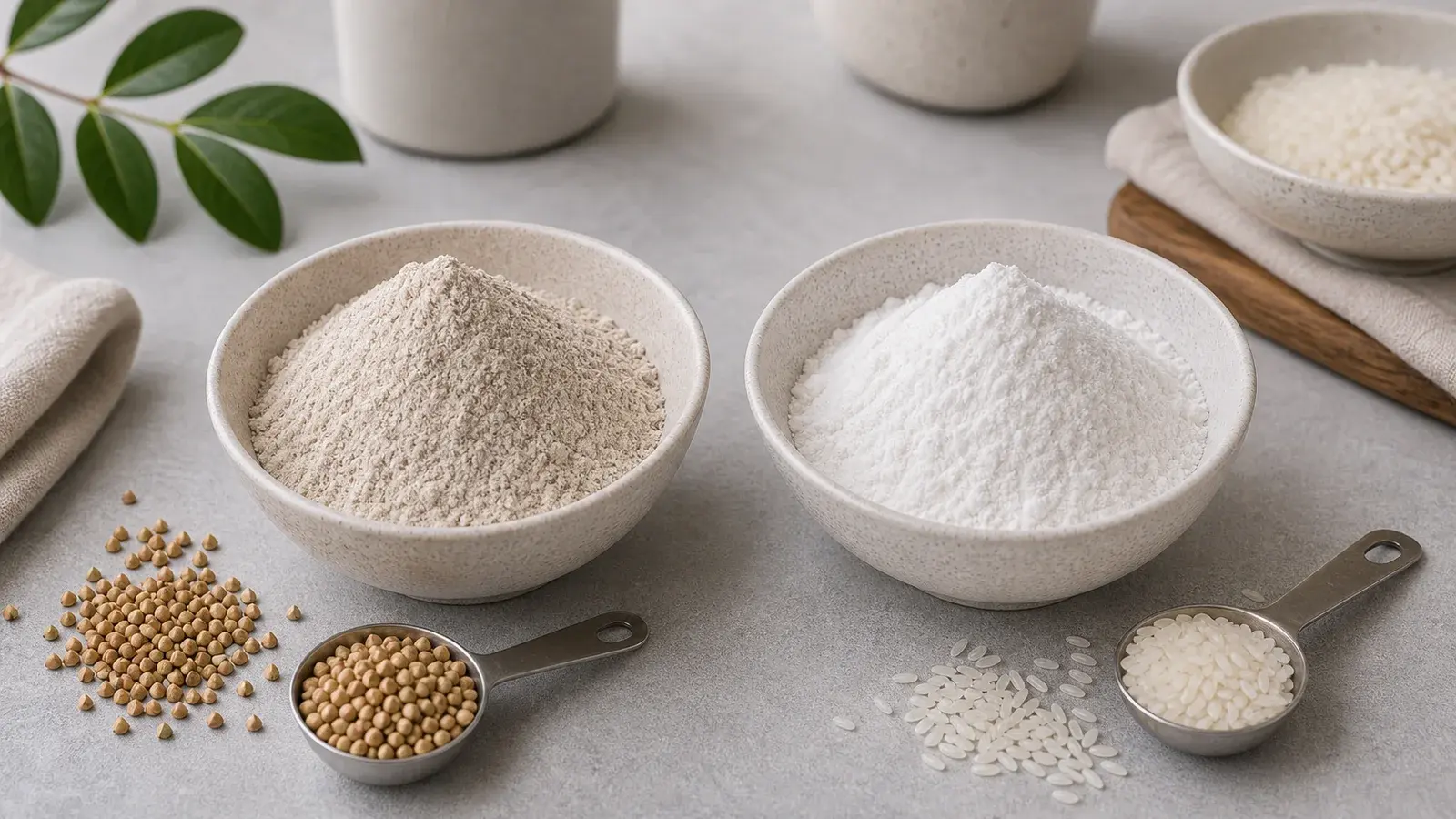
| Color | Dark grey-brown | White or light tan |
| Best for | Pancakes, soba, crepes, hearty bread | GF blends, cakes, noodles, coating |
What Is Buckwheat Flour?
Buckwheat flour is made by milling whole buckwheat groats (or, in the case of "dark" buckwheat flour, groats with their hull) into a powder. The result is a distinctive dark, grey-brown flour with a robust, earthy, slightly nutty flavor that's immediately recognizable in traditional dishes like Japanese soba noodles, French galettes, and Eastern European blinis.
Buckwheat is a nutritional powerhouse compared to most GF flours: it's higher in protein, fiber, and minerals like magnesium and manganese. It also contains rutin, a flavonoid antioxidant. This nutritional density comes with a stronger flavor profile, which is why buckwheat flour is rarely used alone in sweet baked goods — it tends to dominate.
Flavor profile: Earthy, nutty, slightly bitter. Works beautifully in savory recipes; can be assertive in sweet ones.
Popular brands: Bob's Red Mill Buckwheat Flour, Arrowhead Mills Organic Buckwheat Flour, Anthony's Organic Buckwheat Flour
Best uses:
- Buckwheat pancakes (classic breakfast)
- Crepes and galettes (traditional French style)
- Soba noodles (100% buckwheat variety)
- Hearty sandwich bread (blended with other GF flours)
- Blinis and Russian buckwheat porridge (kasha)
What Is Rice Flour?
Rice flour is made by milling dried rice into a fine powder. It's the most widely used GF flour globally, forming the backbone of countless GF flour blends. Its mild flavor makes it the most neutral of the common GF flours — it adds bulk and structure without strongly influencing the taste of your baked goods.
White rice flour has a slightly gritty texture when used alone at high quantities, but super-fine milled varieties (like Authentic Foods) and combinations with starches eliminate this problem. Brown rice flour is nuttier with more fiber and behaves similarly to whole-wheat flour in terms of density.
Flavor profile: Very mild, slightly grainy. Fades into the background in most recipes.
Popular brands: Bob's Red Mill White/Brown Rice Flour, Anthony's White Rice Flour, Authentic Foods Super-Fine Rice Flour
Best uses:
- Base of GF all-purpose flour blends
- Rice noodles and pasta
- Tempura and crispy coatings
- Cakes, cookies, and muffins (in a blend)
- Rice crackers and shortbread
Flavor and Texture in Baking
The most important practical difference between these two flours is flavor:
- Buckwheat brings a strong, characteristic taste that can be the star of a recipe or an intrusive background note, depending on the dish. Use it intentionally.
- Rice flour is the "vanilla" of GF flours — it's there to do a job without drawing attention to itself.
In terms of texture, buckwheat flour produces a denser, heartier crumb with better moisture retention than rice flour used alone. Blending them — often a 30% buckwheat / 70% rice flour mix — gives you a flour combination with good structure, mild flavor, and a pleasant slight nuttiness.
Blending Example (for pancakes)
- 1 cup rice flour
- ⅓ cup buckwheat flour
- 1 tablespoon tapioca starch
- ½ teaspoon xanthan gum
This blend makes excellent, slightly hearty pancakes with better nutritional value than rice-flour-only.
⚠️ Safety Notes for Celiacs and Allergy Sufferers
- Buckwheat is NOT wheat and contains no gluten. However, it is frequently processed alongside wheat in mills that also handle wheat products. This cross-contamination risk means that buckwheat products are not automatically safe for celiacs. Always choose certified gluten-free buckwheat flour from a dedicated GF facility.
- Traditional soba noodles sold in Japanese restaurants typically contain wheat flour blended with buckwheat — they are not gluten-free unless explicitly labeled as 100% buckwheat or certified GF.
- Rice flour is generally lower risk for cross-contamination, but certified GF labeling is still recommended for celiac-safe cooking.
- Buckwheat allergy exists (it's a more common allergen in East Asia than in Western countries). If you've never had buckwheat before, introduce it in small amounts to check for tolerance.
Where to Buy
- Amazon US: Shop buckwheat flour on Amazon
- Amazon UK: Shop buckwheat and rice flour on Amazon UK
- iHerb: Browse buckwheat products on iHerb
Conclusion
Choose buckwheat flour when you want a nutritious, flavorful, distinctively earthy flour — it shines in pancakes, galettes, blinis, and hearty breads. Choose rice flour when you need a neutral, reliable base for GF flour blends, baking, noodles, and coatings. Blending the two gives you the best of both: nutrition and flavor from buckwheat, neutral structure from rice flour.
Frequently Asked Questions
Q: Is buckwheat actually gluten-free? Yes — buckwheat is a seed, not a grain, and it contains no gluten. However, it's often processed in facilities that also handle wheat, creating a cross-contamination risk. For celiac disease, always choose buckwheat flour that is specifically certified gluten-free.
Q: Can I replace rice flour with buckwheat flour in a recipe? You can, but the flavor change is significant — buckwheat has a strong earthy taste that will dominate. For a neutral result, rice flour is the better choice. For pancakes, muffins, or heartier baked goods, a 30:70 buckwheat-to-rice-flour blend is a good starting point.
Q: Are soba noodles gluten-free? Traditional soba noodles are usually a blend of buckwheat flour and wheat flour — they are NOT gluten-free. Look specifically for 100% buckwheat soba noodles, or certified GF soba brands. Check the label carefully, as "buckwheat soba" does not automatically mean wheat-free.
Q: What does buckwheat flour taste like? Buckwheat has a distinctive earthy, slightly nutty, and mildly bitter flavor — some describe it as almost chocolatey or mushroom-like when roasted. It pairs well with berries, maple syrup, honey, and strong flavors like dark chocolate. It can taste overpowering in neutral or delicate sweet recipes.
Q: Is buckwheat flour higher in protein than rice flour? Yes. Buckwheat flour contains roughly 13g of protein per 100g, compared to around 6g in white rice flour. Buckwheat also provides all nine essential amino acids, making it a more complete protein source. For a more nutritious GF flour, buckwheat is a strong choice — blend it with rice flour to moderate the flavor.