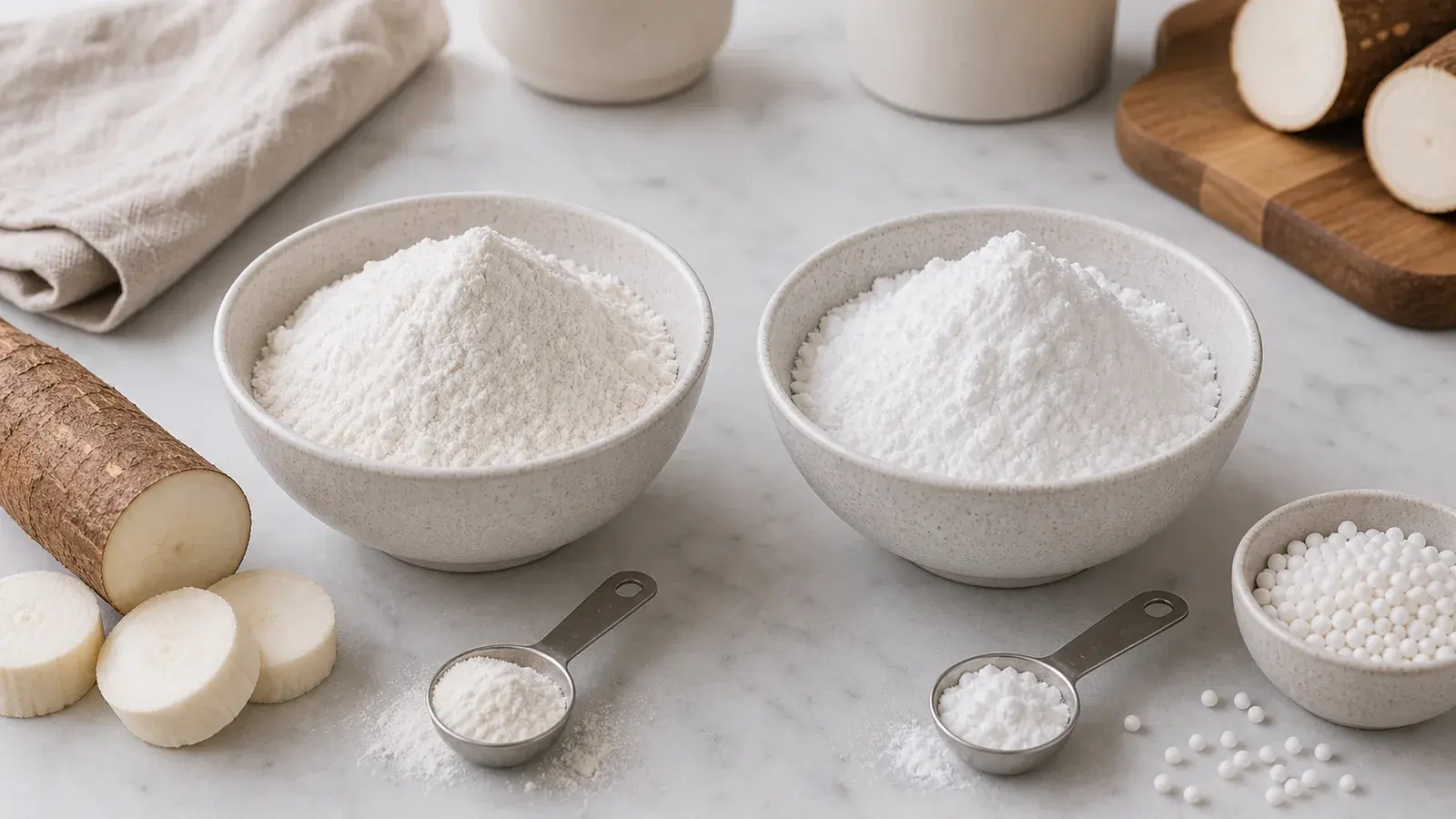
cassava flour vs tapioca starch
Cassava Flour vs Tapioca Starch: What's the Difference?
Cassava flour vs tapioca starch — understand the key differences, how to substitute each in GF recipes, and critical safety notes about raw cassava.
Both cassava flour and tapioca starch come from the same plant — the cassava root (also called yuca) — yet they are not interchangeable in recipes. One is a whole-food flour, the other a refined starch, and each has distinct properties that affect texture, structure, and how your baked goods turn out. If you've ever wondered why your cassava tortillas worked perfectly but a tapioca swap failed, this guide has the answer.
Quick Comparison
| Property | Cassava Flour | Tapioca Starch |
|---|---|---|
| Source | Whole peeled, dried cassava root | Extracted starch from cassava root |
| Texture | Fine, powdery, slightly grainy | Very fine, silky, pure white |
| Gluten-free | Yes | Yes |
| Closest substitute for | All-purpose flour | Cornstarch |
| Binding ability | Moderate | High (thickener) |
| Best use | Tortillas, flatbreads, cakes | Sauces, pies, puddings, GF flour blends |
What Is Cassava Flour?
Cassava flour is made from the entire cassava root — peeled, dried, and ground into a fine powder. Because it uses the whole root, it retains the fiber, starch, and other nutrients of the plant. The result is a flour that behaves more like a whole-grain flour than a pure starch.
Cassava flour has a very mild, neutral flavor with a slightly earthy undertone, making it versatile in both sweet and savory recipes. It's one of the few single-ingredient gluten-free flours that can substitute for all-purpose flour at close to a 1:1 ratio — usually about ¾ cup cassava flour per 1 cup all-purpose flour.
It is a staple in Latin American, West African, and Southeast Asian cuisines and has become extremely popular in the paleo and grain-free communities.
Popular brands: Otto's Naturals Cassava Flour, Anthony's Cassava Flour, Bob's Red Mill Cassava Flour
Best uses:
- Cassava flour tortillas (excellent texture)
- Flatbreads and wraps
- Cakes and muffins (with additional binding)
- Breading for frying
What Is Tapioca Starch?
Tapioca starch (also called tapioca flour — the names are used interchangeably in most markets) is produced by extracting, washing, and drying just the starch granules from the cassava root. The fiber, protein, and other components of the root are removed, leaving behind a pure, very fine white powder.
As a purified starch, tapioca behaves like cornstarch: it thickens liquids, creates a glossy, transparent gel when heated, and adds chewiness to baked goods. It is a key ingredient in many gluten-free flour blends because it helps mimic the stretch and springiness that gluten provides.
On its own, tapioca starch produces very chewy, somewhat gummy results if used in large quantities, so it's almost always used in combination with other flours.
Popular brands: Bob's Red Mill Tapioca Starch, Anthony's Organic Tapioca Flour, Let's Do Organic Tapioca Starch
Best uses:
- Thickening sauces, gravies, and pie fillings
- Gluten-free flour blends (typically 10–20% of the total flour weight)
- Bubble tea pearls and tapioca pudding
- Adding chewiness to GF cookies and pizza crust
Tapioca vs Cornstarch: Thickening Ratio
Use 2 teaspoons tapioca starch to replace 1 tablespoon cornstarch as a thickener. Tapioca produces a clearer, glossier finish than cornstarch, which makes it preferable for fruit pies and clear sauces.
Can You Substitute One for the Other?
Cassava flour → Tapioca starch: Not a direct swap. Tapioca starch lacks the fiber and structure of cassava flour. Using it in equal amounts in a tortilla recipe will give you something that falls apart and has a gummy, starchy texture.
Tapioca starch → Cassava flour: Also not a direct swap. Cassava flour doesn't thicken sauces the way tapioca starch does, and you'll end up with a starchy, floury sauce.
Use each in its designed role: cassava flour for baking and tortillas; tapioca starch as a thickener or as part of a GF flour blend.
⚠️ Safety Notes for Celiacs and Allergy Sufferers
- Raw cassava is toxic. Cassava root naturally contains cyanogenic glycosides — compounds that release hydrogen cyanide when the raw root is consumed. Never eat raw cassava root. Commercial cassava flour and tapioca starch are fully processed and safe; this warning applies only to unprocessed raw root.
- Cross-contamination: Despite being naturally gluten-free, both products can be cross-contaminated during processing. Always choose brands with a certified gluten-free label if you have celiac disease.
- Not a significant allergen, but some individuals report sensitivity to cassava — if you experience digestive discomfort, speak to your healthcare provider.
- Cassava flour and tapioca starch are both soy-free, dairy-free, nut-free, and egg-free, making them broadly compatible with most common dietary restrictions.
Where to Buy
- Amazon US: Shop cassava flour on Amazon
- Amazon UK: Shop cassava flour and tapioca starch on Amazon UK
- iHerb: Browse tapioca starch on iHerb
Conclusion
Cassava flour and tapioca starch come from the same root but serve different purposes. Choose cassava flour when you need a versatile all-purpose flour substitute for tortillas, flatbreads, and cakes. Choose tapioca starch when you need a thickener for sauces and pies, or as a chewy component in a GF flour blend. Understanding the distinction will immediately improve your gluten-free cooking results.
Frequently Asked Questions
Q: Is cassava flour the same as tapioca starch? No. Both come from the cassava root, but cassava flour is made from the whole dried root while tapioca starch is extracted from just the starch. They have different textures, fiber contents, and culinary uses and are not interchangeable in recipes.
Q: Can I use cassava flour 1:1 to replace all-purpose flour? Almost. The most commonly recommended ratio is ¾ cup cassava flour per 1 cup of all-purpose flour. It's one of the closest single-ingredient swaps available, though some recipes may still need a small adjustment in liquid or binding agents.
Q: Is cassava flour safe for people with celiac disease? Cassava is naturally gluten-free, but cross-contamination during manufacturing is possible. Always choose a brand with certified gluten-free certification — look for logos from organizations like GFFS or the NFCA. Brands like Otto's Naturals and Anthony's both offer certified options.
Q: Why does raw cassava contain cyanide compounds? Cassava naturally produces cyanogenic glycosides as a defense mechanism against pests. When the raw root is damaged or eaten, these compounds can release hydrogen cyanide. Proper processing — drying, fermenting, or cooking — destroys these compounds entirely. All commercially sold cassava flour and tapioca starch have been fully processed and are safe to consume.
Q: Can I use tapioca starch to thicken a sauce instead of cornstarch? Yes. Use 2 teaspoons of tapioca starch to replace 1 tablespoon of cornstarch. Tapioca thickens at a lower temperature than cornstarch and produces a clearer, shinier result. Avoid boiling sauces thickened with tapioca for too long, as prolonged high heat can cause the gel to break down and become stringy.