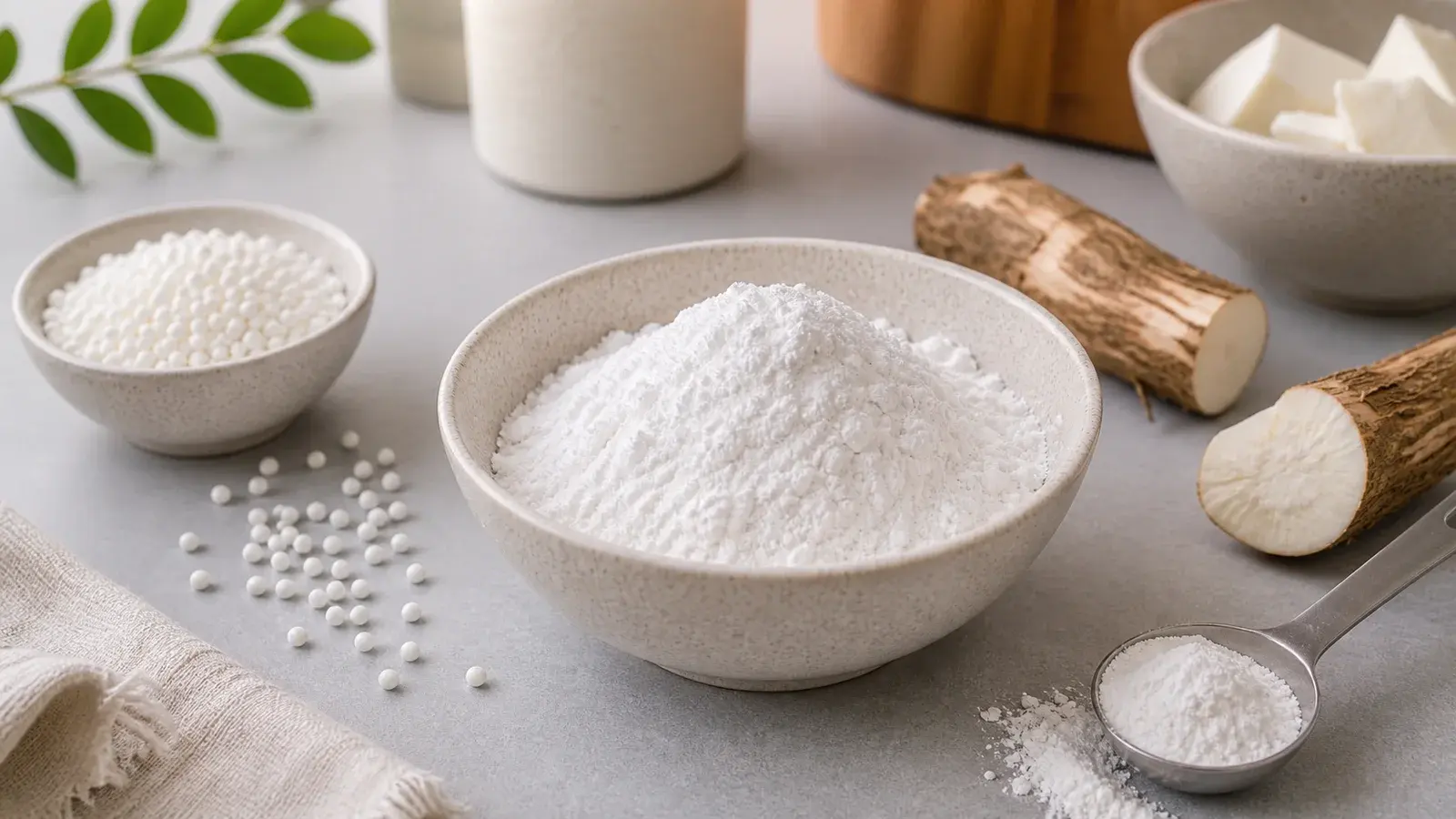
tapioca starch gluten-free baking
Tapioca Starch
Tapioca starch (also called tapioca flour in many US and UK markets — the two terms are largely interchangeable for the refined starch product) is derived from the cassava plant (Manihot esculenta). Through a wet extraction process, the starchy liquid is pressed from grated cassava, then settled, washed, and dried into a fine white powder. Unlike cassava flour, which uses the whole root, tapioca starch contains almost exclusively pure starch — it has very little fiber, protein, or fat. In baking, tapioca starch plays several distinct roles. Its gelation properties create a chewy, stretchy texture in baked goods. When used in combination with other GF flours — typically at 10–25% of a flour blend — it lightens the overall texture, counteracting the heaviness of denser flours like rice or sorghum. In sauces and gravies, it thickens without making the liquid opaque, producing a clear, glossy finish. Tapioca starch is also a common component in bubble tea (the tapioca pearls are formed from this same starch), and it serves as a thickener in many Asian cuisines.
What is it?
Tapioca starch is pure refined starch — composed almost entirely of amylopectin, a highly branched starch that is responsible for its distinctive chewy, stretchy texture when cooked. This high amylopectin content also explains why tapioca thickens at relatively low temperatures and produces a clear gel rather than an opaque one (compared with cornstarch, which contains more amylose). Nutritionally, tapioca starch is high in carbohydrates and very low in everything else — minimal protein, fat, fiber, vitamins, or minerals. It is essentially a pure energy source. For this reason it is used in small quantities to modify the texture of GF flours rather than as a primary nutritional ingredient.
How to use
Tapioca starch is almost never used alone — it is a functional additive within a broader flour blend. In GF flour blends: Use tapioca starch at 15–25% of total flour weight. A classic blend might be: 40% rice flour + 25% potato starch + 20% tapioca starch + 15% sorghum flour. As a thickener: Use 1 tablespoon of tapioca starch to thicken 1 cup of liquid (slightly more than cornstarch is needed). It produces a clear, glossy sauce. Add to cold or room-temperature liquid before heating — never add directly to boiling liquid or it may clump. For crispy coatings: Coat proteins or vegetables in tapioca starch before frying for an exceptionally crispy, glass-like crust (popular in Korean and Japanese fried chicken techniques). Pizza crust: A high proportion of tapioca starch (25–30%) in a GF pizza dough creates a stretchy, chewy crust. Cheese sauces: Tapioca starch is used in many vegan and dairy-free "cheese" recipes because its stretchiness mimics melted cheese.
Substitutes
| Substitute | Ratio | Notes |
|---|---|---|
| Arrowroot starch | 1:1 | Best substitute; very similar texture and appearance |
| Potato starch | 1:1 | Slightly heavier; works well in most applications |
| Cornstarch | 1:1 | Common substitute; produces a slightly cloudier sauce |
| Cassava flour | Use ½ the amount | Much more absorbent; adjust liquids accordingly |
| Rice flour | 1:1 | Less chewy; grittier texture; acceptable in blends |
Safety notes
⚠️ Cross-contamination: Tapioca starch is naturally gluten-free, but it is sometimes processed in facilities that handle wheat-based starches. Always choose products with a certified gluten-free label when cooking for someone with celiac disease. ⚠️ Tapioca Starch vs. Tapioca Flour Labeling Confusion: In most US and UK markets, "tapioca flour" and "tapioca starch" refer to the same refined white powder. However, in some markets (particularly Southeast Asian grocery stores), "tapioca flour" may refer to a slightly coarser product with different thickening properties. When in doubt, check the texture — it should be a very fine, silky white powder. ⚠️ Blood Sugar Impact: Tapioca starch has a very high glycemic index and is very low in fiber. People managing diabetes or following a low-glycemic diet should use it sparingly and ensure the overall meal has adequate fiber and protein to moderate blood sugar response. ⚠️ Not a Nutritional Substitute: Tapioca starch contributes essentially no nutritional value beyond carbohydrates. It should not be used as a primary flour for nutritional purposes — always blend it with more nutrient-dense GF flours.
Where to buy
- Health food stores: Whole Foods Market, Sprouts (US); Holland & Barrett, Waitrose (UK) - Asian grocery stores: Excellent and often affordable source; sold in large bags - Online (US): iHerb, Amazon, Bob's Red Mill, Anthony's Goods - Online (UK): Amazon UK, Doves Farm, Asian supermarkets online - Mainstream grocery: Found in the GF baking or natural foods aisle Bob's Red Mill, Anthony's Goods, and Arrowhead Mills are reliable certified GF US brands.
Some product links may be affiliate links when a valid partner ID is configured. Always verify ingredients and labels before buying.
Storage
Store in an airtight container in a cool, dry place. Tapioca starch has a long shelf life of 2–3 years when stored properly. It is particularly sensitive to moisture — even brief exposure to humid air can cause clumping. If you live in a humid climate, store in the refrigerator in a sealed container. Freeze for very long-term storage.
FAQ
What is the difference between tapioca starch and tapioca flour?
In most Western markets, they are the same product — finely ground, refined cassava starch. Packaging labeling varies by brand. Both should be a very fine, brilliant-white powder. Note that cassava flour (made from the whole root) is a completely different product and is not interchangeable.
Can I use tapioca starch alone as a flour substitute?
No. Used alone as the main flour, tapioca starch creates rubbery, gummy baked goods with no structural integrity. It needs to be blended with other GF flours that provide protein and fiber for structure.
How do I prevent tapioca starch from clumping in sauces?
Always make a slurry first: mix tapioca starch with an equal amount of cold water until completely smooth, then add it to the warm liquid while stirring. Never add dry tapioca starch directly to hot liquid.
Is tapioca starch the same as the balls in bubble tea?
The large, chewy balls in bubble tea (boba) are made from tapioca starch, but they are formed into spheres and boiled — not the same as the dry powder used in baking. Both come from the same ingredient, but the preparation is entirely different.
Does tapioca starch freeze well in baked goods?
Yes — in fact, tapioca starch improves the freeze-thaw stability of baked goods by preventing them from becoming dry or crumbly after freezing. This is one reason it is a common component in commercially produced GF products intended for frozen storage.