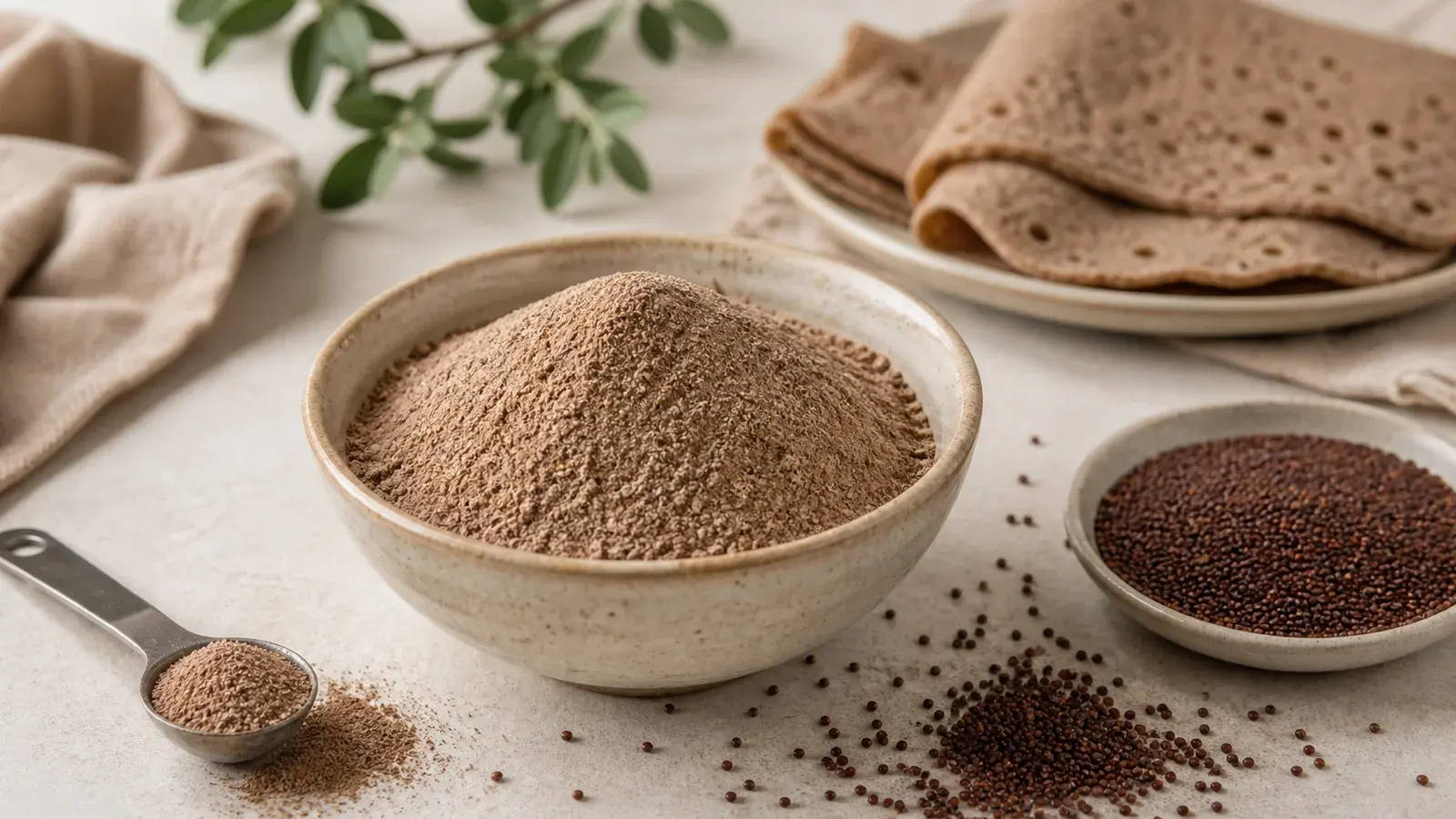
teff flour gluten-free
Teff Flour
Teff (Eragrostis tef) is a tiny cereal grain indigenous to Ethiopia and Eritrea, where it forms the backbone of injera, the spongy fermented flatbread central to East African cuisine. At just 1–1.5 mm in diameter, teff is one of the smallest grains in the world — too small to be practically refined — meaning the whole grain is always milled intact. This gives teff flour its characteristic deep flavor and impressive nutritional density. For people with celiac disease or non-celiac gluten sensitivity, teff flour is a welcome addition to the GF pantry. It is naturally free from wheat, barley, and rye, and it delivers meaningful amounts of iron, calcium, and resistant starch. Dark teff flour (made from darker seed varieties) has a bolder, earthier taste, while ivory teff produces a milder, lighter result. Because of its high fiber and protein content relative to many other GF flours, teff flour contributes structure and moisture retention that purely starchy alternatives cannot match. Bakers worldwide have embraced it for everything from pancakes and muffins to bread loaves and cookies.
What is it?
Teff flour is the finely milled whole grain of the teff plant. It is inherently gluten-free by nature — it contains no gluten proteins whatsoever. The grain comes in dark (reddish-brown) and ivory varieties; both are ground into flour and used interchangeably, though flavor intensity differs. Teff is rich in complex carbohydrates, dietary fiber, calcium (notably higher than most grains), iron, and essential amino acids including lysine. For gluten-free cooking, teff flour is valued for several properties: it absorbs liquid well, lends moisture to baked goods, and provides a subtle earthy sweetness that pairs beautifully with chocolate, spices, and fruit. It is commonly used in blend-based GF baking, contributing up to 25–30% of a flour blend before its flavor becomes dominant.
How to use
Teff flour works best blended with lighter GF flours rather than used as the sole flour. As a general guide, replace 20–30% of your GF flour blend with teff flour to introduce flavor and nutrition without overwhelming the bake. - Pancakes and waffles: Substitute 25–50% of rice flour with teff flour for a nuttier, heartier result. - Muffins and quick breads: Use up to 30% teff in a blend; pair with tapioca starch for lift. - Chocolate baked goods: Teff's earthy notes complement cocoa and dark chocolate beautifully — use up to 40%. - Flatbreads and crackers: Teff can function as the primary flour here, echoing traditional injera. - Binding: Add 1 tsp xanthan gum or psyllium husk per cup when using teff-heavy blends to compensate for the lack of gluten. Because teff absorbs more moisture than white rice flour, increase liquid in recipes by 1–2 tablespoons when substituting more than 25% of a flour blend.
Substitutes
| Substitute | Ratio | Notes |
|---|---|---|
| Sorghum flour | 1:1 | Closest in texture and protein content; milder flavor |
| Buckwheat flour | 1:1 | Similar earthy, assertive flavor; darker color |
| Brown rice flour | 1:1 | Lighter flavor; less nutritious but widely available |
| Oat flour (certified GF) | 1:1 | Milder, sweeter; check for certified GF labeling |
| Millet flour | 1:1 | Lighter color and flavor; good nutritional substitute |
Safety notes
⚠️ Celiac & Gluten Sensitivity: Teff is naturally gluten-free, but cross-contamination during growing, harvesting, or milling is a real risk. Always purchase teff flour that carries a certified gluten-free label (GFCO, NSF, or equivalent). Products produced in facilities that also handle wheat, barley, or rye are not safe for celiacs regardless of ingredient status. ⚠️ Grain Allergy: Teff is a cereal grain. Those with broad grass-seed or grain allergies should consult an allergist before consuming teff. ⚠️ Oxalate Content: Teff contains moderate oxalates. Individuals managing kidney stones or oxalate sensitivity should consume in moderation and discuss with their healthcare provider.
Where to buy
- Health food stores: Whole Foods Market, Natural Grocers, Sprouts (US); Holland & Barrett (UK) - Online (US): iHerb, Amazon, Bob's Red Mill website - Online (UK): Amazon UK, Planet Organic, Real Foods - Mainstream grocery: Available in the natural/health food aisle of many large supermarkets Look for brands such as Bob's Red Mill, Maskal Teff, and Anthony's Goods. Buy in smaller quantities initially to assess freshness.
Some product links may be affiliate links when a valid partner ID is configured. Always verify ingredients and labels before buying.
Storage
Store teff flour in an airtight container in a cool, dark place for up to 3 months at room temperature, or refrigerate for up to 6 months. Freeze for up to 12 months for long-term storage. Because teff is a whole-grain flour (bran intact), its natural oils can go rancid faster than refined flours. Smell-test before use — rancid teff flour has a bitter, paint-like odor.
FAQ
Is teff flour really gluten-free?
Yes. Teff contains no gluten proteins — it is a naturally gluten-free grain. However, for people with celiac disease, only certified gluten-free teff flour from a dedicated GF facility is safe, due to the risk of cross-contamination in shared processing environments.
What does teff flour taste like?
Teff has a distinctive nutty, earthy, slightly molasses-like flavor. Dark teff is bolder and almost chocolate-adjacent; ivory teff is milder and slightly sweet. This makes it particularly well-suited to hearty breads, pancakes, and chocolate baked goods.
Can I use teff flour as a 1:1 substitute for all-purpose flour?
Not directly. Teff flour lacks gluten, so it will not provide the same structure or elasticity as wheat flour. For best results, use it as part of a blended GF flour mix (20–30% teff alongside starchy flours) and include a binder such as xanthan gum or psyllium husk.
Is teff flour good for you?
Teff is exceptionally nutritious. It is a good source of iron, calcium, resistant starch, and dietary fiber. It contains all essential amino acids and has a lower glycemic impact than many refined GF flours. It is particularly valued in plant-based and celiac diets for its iron content.
Where is teff originally from?
Teff originated in the Horn of Africa — primarily Ethiopia and Eritrea — where it has been cultivated for at least 3,000 years. It remains a dietary staple throughout East Africa and is increasingly grown in the US (notably Idaho), Australia, and Europe.